Celebrating 27 Years 1999-2026
CMC Technologies has been exclusively representing MidWest Instrument in Australia since 1999 providing advanced differential pressure sensors with tailored solutions for diverse applications including filtration, HVAC, gas, cryogenic and tank level monitoring, ensuring precise, reliable performance across industries and the guide below is a good starting point for a gauge selection specific to your application.
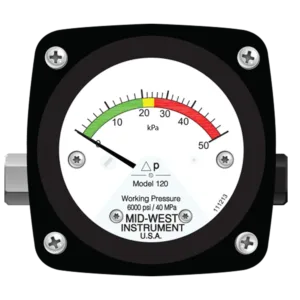
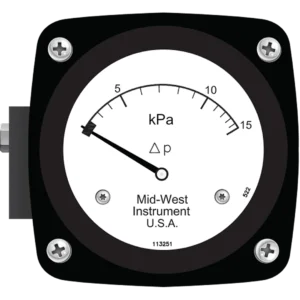
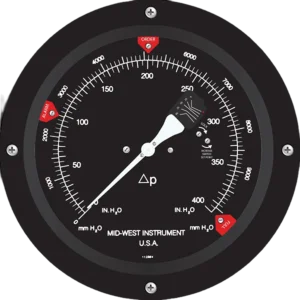
Please call or contact our office for technical and service support if you are unsure which type to use for your specific application.
WHICH GAUGE TYPE IS RIGHT FOR YOU. DOWNLOAD OUR DATASHEET.
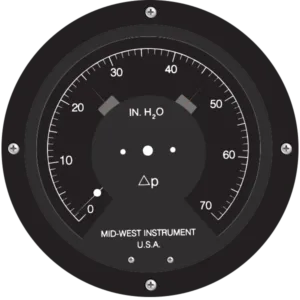
Piston Type Differential Pressure Gauge
- Accuracy: ±2% to ±5% Full Scale
- How It Works: Measures liquid differential pressure using a precision ground floating piston and magnet inside a bore with a calibrated spring. Pressure changes move the piston magnet, which is tracked by an external rotary pointer magnet, providing a leak-free dial reading. Bypass leakage is minimal, under 15 SCFH air at 100 PSID (approx. 689.476 kPa) in ambient conditions.
- Features: Available option with one or two hermetically sealed reed switches or a 4-20mA transmitter. Switches can be set for activation on rising or falling pressure and come in SPDT or SPST configurations. Available option for hazardous locations with ATEX/IECEX certification.
- Best For: Accurate liquid pressure measurement where minor fluid bypass is acceptable. Not recommended for gas applications due to gas molecule bypass.
- Common Uses: Hydraulic systems, liquid filtration monitoring, industrial liquid process measurement.
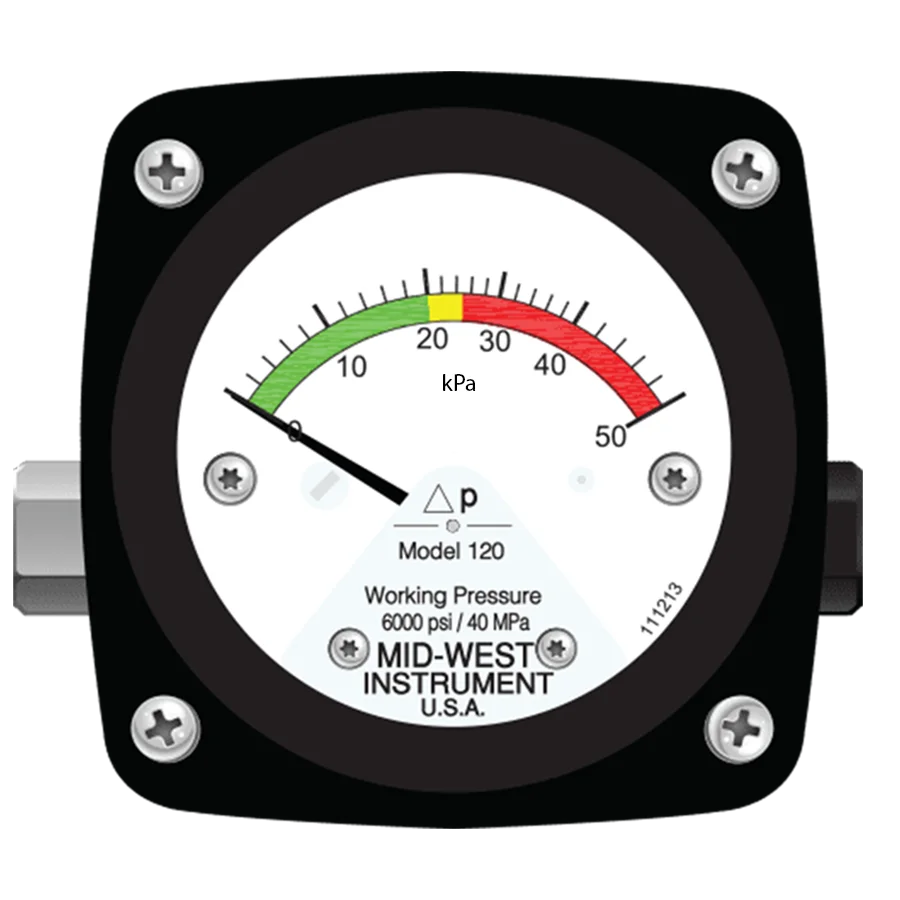
Diaphragm Type Differential Pressure Gauge
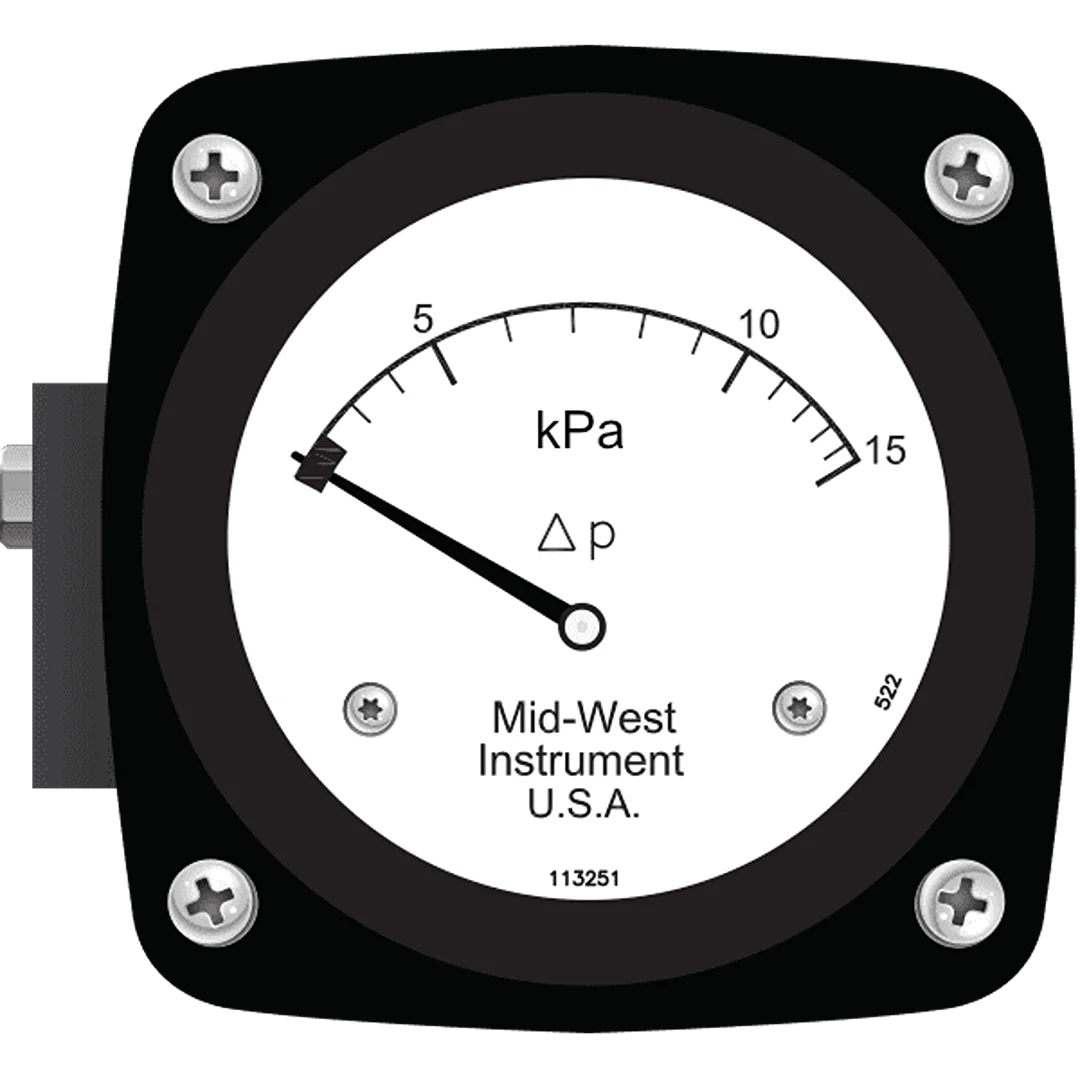
- Accuracy: ±2% to ±5% Full Scale
- How It Works: Uses an elastomer diaphragm separating high and low-pressure ports with no bypass, suitable for air, gases, liquids, and fluids containing solids. The diaphragm moves an internal magnet, which turns an external rotary magnet and pointer on the dial.
- Features: Options include hermetically sealed reed switches and 4-20mA transmitters, with adjustable switching settings for rising or falling pressure activation. Switches are CE marked and ATEX/IECEX certified for hazardous locations where applicable. Some models provide piezo-resistive sensing with silicone oil fill for precise voltage or current output.
- Best For: Applications requiring fluid isolation, handling dissimilar fluids or solids-laden fluids, and sensitive pressure measurement.
- Common Uses: HVAC systems, chemical processing, filter monitoring, corrosive or contaminated fluid handling.
Bellows Type Differential Pressure Gauge
- Accuracy: ±0.5% to ±1% Full Scale
- How It Works: The bellows sensing element expands or contracts with differential pressure and moves the mechanical linkage to the pointer. Includes a torque tube, range spring and bi-directional relief valve for overpressure protection both ways. Optional cam-triggered microswitches are available.
- Features: Two-part body isolates high and low-pressure sides. Overpressure protection safeguards the gauge from damage.
- Best For: High accuracy applications requiring reliable measurement and overpressure protection.
- Common Uses: Critical industrial process control where precise differential pressure readings are needed.
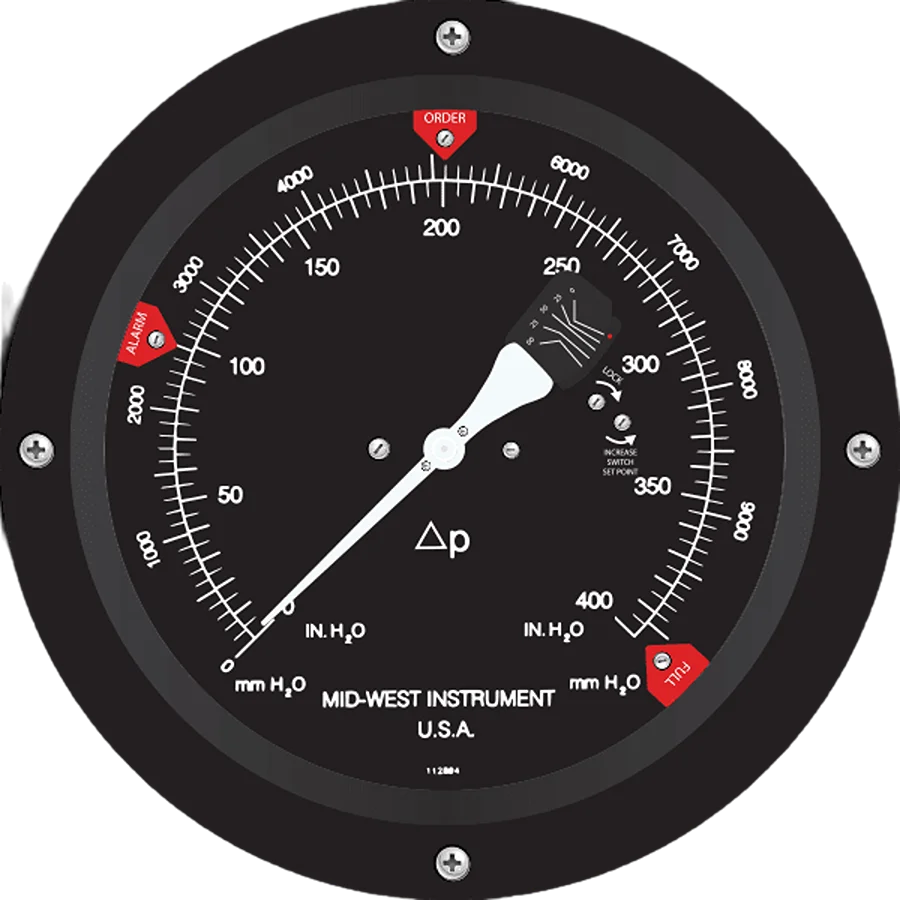
Bourdon Tube Type Differential Pressure Gauge
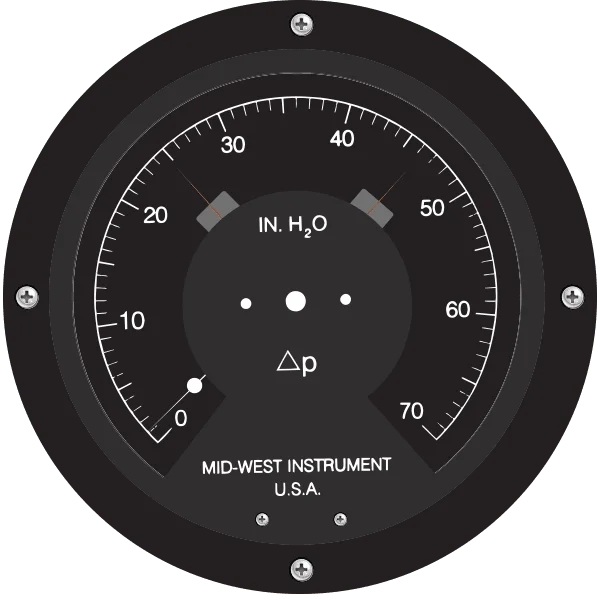
- Accuracy: ±0.5% to ±1% Full Scale
- How It Works: Pressure inside a flattened arc-shaped Bourdon tube causes it to straighten, moving the tube tip. This movement is magnetically coupled through a sealed chamber to an external jeweled pointer for fast and accurate readings with minimal volume displacement (~0.02cc). Overpressure protection is provided by a bi-directional relief valve.
- Features: Designed for rapid response and low volume displacement, ideal for leak detection and use with isolation diaphragms.
- Best For: Fast response differential pressure monitoring in gas filtration and leak detection systems where minimal system disruption is essential.
- Common Uses: Gas filtration monitoring, leak detection systems requiring quick response and accuracy.